
← News & Research
Research
Cross-cultural validation of plasma p-tau217 and p-tau181 as precision biomarkers for amyloid PET positivity: An East Asian study in Taiwan and Korea
January 29, 2025
[Abstract]
INTRODUCTION
Plasma phosphorylated tau (p-tau) biomarkers have improved Alzheimer's disease (AD) diagnosis, but data from diverse Asian populations are limited. This study evaluated plasma p-tau217 and p-tau181 levels in Korean and Taiwanese populations.
METHODS
All participants (n = 270) underwent amyloid positron emission tomography (PET) and blood tests. Plasma p-tau model-derived probabilities of amyloid PET positivity (amyloid beta [Aβ]+) classified participants into low-, intermediate-, or high-risk groups.
RESULTS
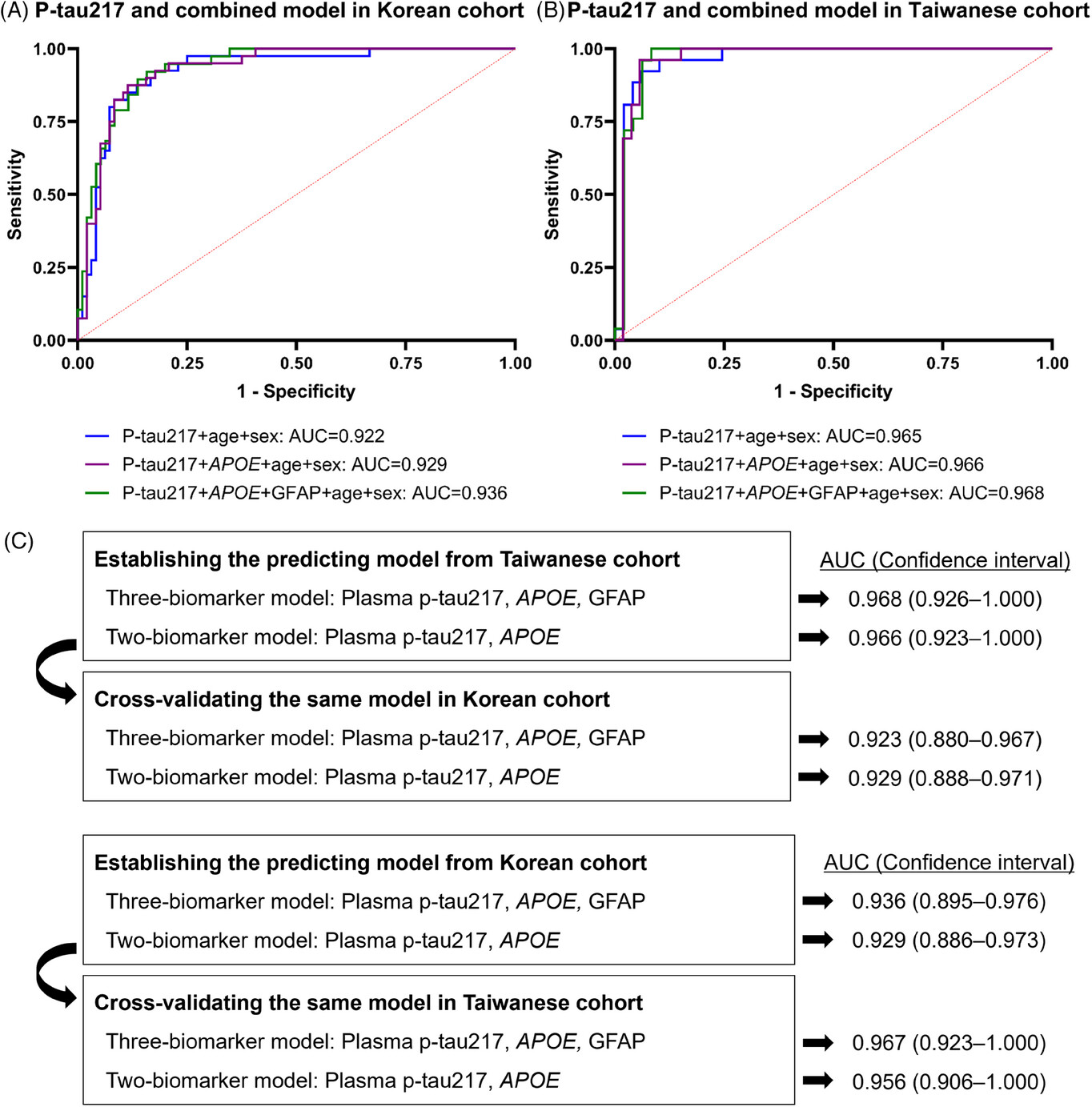
In both cohorts, plasma p-tau217 outperformed p-tau181, especially in cognitively unimpaired participants (area under the curve = 0.921 [p-tau217] vs. 0.769 [p-tau181], Pdifference = 0.022). Including apolipoprotein E status and glial fibrillary acidic protein improved model fit. The negative predictive value of the low-risk group and positive predictive value of the high-risk group were 97.5% and 86.0%, respectively.
DISCUSSION
Plasma p-tau217 and p-tau181 effectively predict Aβ+ among culturally different Asian populations. P-tau217 performed better, especially in the early stages of AD. Plasma p-tau217–based models reduced intermediate-risk classifications, suggesting fewer amyloid PET scans needed to confirm the diagnosis.